
Plasma Cutter Cutting Guides: A Comprehensive Overview (11/25/2025 11:58:48)
This guide details optimal plasma cutting, focusing on amperage, air pressure, pierce/cut height, and feed rate for various materials and machines.
Successful plasma cutting relies on precise settings, as demonstrated by charts for models like the Everlast 82i and CUT 50, ensuring quality and efficiency.
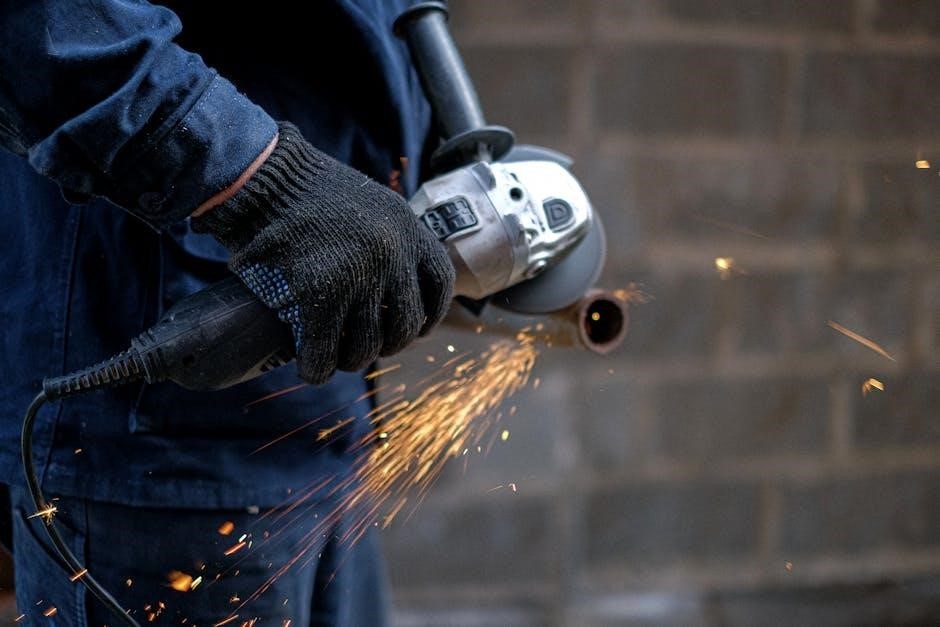
Plasma cutting utilizes a high-velocity jet of ionized gas to melt and remove material, offering speed and precision for diverse metals.
It’s a versatile process, favored for its efficiency and ability to cut both conductive materials, surpassing traditional methods in many applications.
What is Plasma Cutting?
Plasma cutting is a thermal cutting process that employs a high-velocity, ionized gas – plasma – to melt and sever electrically conductive materials.
The process begins by forcing gas, typically compressed air, through a constricted nozzle within the plasma torch. An electrical arc is then established, ionizing the gas and transforming it into plasma. This superheated plasma jet reaches temperatures exceeding 20,000°C (36,000°F), instantly melting the metal in its path.
The force of the plasma jet simultaneously blows away the molten metal, creating a clean and precise cut. Unlike traditional oxygen cutting, plasma cutting doesn’t rely on a chemical reaction with the metal, allowing it to cut a wider range of materials, including steel, stainless steel, aluminum, and other non-ferrous metals. The resulting kerf (width of the cut) is typically narrow, minimizing material waste and offering greater precision.
Plasma cutting is widely used in various industries, from fabrication and manufacturing to automotive repair and construction, due to its speed, accuracy, and versatility.
Advantages of Plasma Cutting Over Other Methods
Plasma cutting offers significant advantages over traditional cutting methods like oxy-fuel cutting, laser cutting, and waterjet cutting.
Compared to oxy-fuel, plasma cutting excels in speed and the ability to cut a broader spectrum of metals, including those non-ferrous materials oxy-fuel struggles with. It produces a narrower kerf, reducing material waste and improving precision. Laser cutting, while highly accurate, is generally slower and more expensive, particularly for thicker materials.
Plasma cutting also avoids the heat-affected zone issues sometimes present with laser cutting. Waterjet cutting, though versatile, is considerably slower and can be messy. Plasma cutting delivers weldable cut edges with minimal bevel, crucial for contract cutting firms aiming for quality and efficiency.
Furthermore, plasma cutters are often more portable and require less setup than many alternative systems, making them suitable for both shop and field applications. The ability to consistently deliver accurate parts at competitive prices solidifies plasma cutting’s position as a leading metal cutting technology.
Safety Precautions for Plasma Cutting
Plasma cutting presents inherent hazards demanding strict adherence to safety protocols.
Always wear appropriate personal protective equipment (PPE), including a welding helmet with a proper shade lens – crucial for shielding eyes from the intense arc. Flame-resistant clothing, gloves, and safety boots are essential to protect skin from sparks, heat, and potential electrical hazards. Ensure adequate ventilation to avoid inhaling fumes generated during the cutting process.
Before operation, inspect the equipment for any damage, including hoses, cables, and connections. Verify the grounding is secure to prevent electrical shock. Be mindful of flammable materials in the work area, removing them to prevent fires.
Never cut containers that may have held flammable substances without proper purging and cleaning. Understand the machine’s operation and emergency shutdown procedures. Following these precautions minimizes risks and ensures a safe working environment when utilizing this powerful metal fabrication tool.
Understanding Plasma Cutter Components
Plasma cutters consist of a torch, power supply, air compressor, and consumable parts like electrodes and nozzles, all working in harmony.
These key elements deliver the high-temperature plasma stream necessary for efficient and precise metal cutting operations.
The Plasma Torch
The plasma torch is the central component, directing the high-velocity plasma stream to cut through the workpiece. It’s meticulously engineered to withstand intense heat and electrical forces.
Within the torch, compressed air (or other gases) flows through a constricted nozzle, becoming ionized by an electrical arc. This ionization creates the plasma – a superheated, electrically conductive gas. The torch design focuses this plasma into a narrow, concentrated beam.
Different torch styles exist, catering to various applications. Some torches are designed for handheld operation, offering flexibility, while others are integrated into automated CNC systems for precision and repeatability. The quality of the torch directly impacts cut quality, speed, and overall system performance. Regular inspection and maintenance of the torch, including nozzle cleaning and electrode replacement, are crucial for optimal operation and longevity.
Choosing the right torch for your specific needs, considering material type, thickness, and application, is paramount for achieving desired results.
Power Supply and Air Compressor
The power supply provides the necessary electrical energy to initiate and maintain the plasma arc, while the air compressor delivers the compressed air crucial for plasma formation and material removal. These two components work in perfect synergy.

Plasma cutters require a stable and sufficient power source, often 120V or 240V depending on the machine’s capacity. The power supply converts standard electrical current into the high-voltage, high-frequency electricity needed to ionize the gas.
Simultaneously, the air compressor generates a consistent flow of compressed air, typically between 60-100 PSI, adjusted via a regulator. This airflow cools the torch, constricts the arc, and expels molten metal from the cut. Maintaining adequate air pressure is vital for clean, efficient cuts.
The compressor’s capacity must match the plasma cutter’s requirements to avoid performance issues. Insufficient airflow leads to erratic arcs and poor cut quality.
Consumable Parts: Electrodes, Nozzles, and Swirl Rings
Plasma cutters rely on several consumable parts that degrade with use and require periodic replacement to maintain optimal performance. These include the electrode, nozzle, and swirl ring.
The electrode, typically made of hafnium or zirconium, focuses the plasma arc. Erosion occurs as it withstands the intense heat and electrical current. A worn electrode causes arc instability and poor cut quality.
The nozzle constricts the plasma arc, increasing its velocity and precision. It also directs the plasma gas towards the workpiece. Damage to the nozzle affects cut accuracy and can lead to dross formation.
Swirl rings (found in some models) create a swirling motion of the plasma gas, enhancing arc stability and cooling the nozzle. Their deterioration impacts cut consistency.
Regular inspection and replacement of these parts, based on usage and manufacturer recommendations, are crucial for consistent, high-quality plasma cutting.

Materials Suitable for Plasma Cutting
Plasma cutters excel at processing conductive metals like mild steel, stainless steel, and aluminum, with specific parameters needed for each material’s thickness.
Optimizing settings—amperage, air pressure, and feed rate—is vital for clean cuts and minimal dross across diverse metal types and gauges.
Mild Steel Cutting Parameters
Mild steel, being highly conductive, is readily cut with plasma, but achieving optimal results requires careful parameter adjustments. Stepcraft, Inc. highlights the capability of the CUT 50 to handle up to 5/8” mild steel with appropriate settings.
Generally, lower thicknesses (e.g., 1/8”) demand lower amperage (around 30-40 amps) and faster feed rates. As thickness increases to 1/4” or 3/8”, amperage should rise (45-60 amps) while feed rates decrease for a clean cut. Air pressure typically ranges from 60-90 PSI, influencing arc stability and cut quality.
Pierce height is crucial; a slightly higher pierce height prevents sticking, while cut height affects bevel. Experimentation is key, but starting points include a pierce height of 0.125” and a cut height of 0.0625”. Remember that these are starting points, and adjustments are needed based on the specific machine and material condition. Consistent, accurate cuts depend on precise parameter control.

Park Industries emphasizes the need for consistent delivery of accurate parts, minimizing bevel and dross, which is directly tied to correct mild steel cutting parameters.
Stainless Steel Cutting Parameters
Cutting stainless steel with plasma demands more finesse than mild steel due to its lower thermal conductivity and tendency to work harden. Precise parameter control is vital to avoid excessive dross and maintain a clean cut edge.
Compared to mild steel, stainless steel generally requires lower amperage settings for a given thickness. For example, a 1/4” stainless plate might need 40-50 amps, whereas mild steel would require 45-60 amps. Air pressure should be maintained within the 60-80 PSI range, ensuring a stable arc without excessive heat input.
Feed rates must be slower than those used for mild steel to allow sufficient time for the material to be severed. Pierce height should be slightly lower than for mild steel, around 0.090”-0.100”, to initiate a clean arc. Cut height remains similar, around 0.0625”.
Maintaining a consistent standoff distance and employing a slight lead-in/lead-out technique can further improve cut quality and minimize distortion. Careful attention to these parameters yields weld-able edges.
Aluminum Cutting Parameters
Plasma cutting aluminum presents unique challenges due to its high thermal conductivity and tendency to oxidize rapidly. Achieving clean cuts requires specific parameter adjustments and often, the use of shielding gas.
Aluminum typically necessitates higher amperage settings compared to steel of equivalent thickness. A 1/4” aluminum plate might require 55-70 amps. Crucially, utilize a dry air supply or, ideally, a mix of argon and hydrogen for superior cut quality and reduced oxidation. Air pressure should be in the 70-90 PSI range.
Feed rates must be increased significantly – approximately 20-30% faster than for steel – to prevent the heat from dissipating before a complete cut is achieved. Pierce height should be slightly higher, around 0;125”, to avoid sticking. Cut height remains around 0.0625”.
Consistent travel speed and proper grounding are paramount. Consider using a dedicated aluminum cutting nozzle for optimal performance and minimizing dross formation.

Key Cutting Parameters and Their Impact
Precise control of amperage, air pressure, pierce height, and feed rate are vital for achieving clean, accurate plasma cuts with minimal dross formation.
Amperage Settings and Material Thickness
Determining the correct amperage is paramount for successful plasma cutting, directly correlating with the material’s thickness. Insufficient amperage results in a cut that stalls or fails to penetrate, while excessive amperage leads to increased dross, beveling, and potential damage to the workpiece.
Cut charts, like those provided for the CUT 50, offer starting points, but adjustments are often necessary. Generally, thicker materials require higher amperage settings. For mild steel, a range is provided based on thickness; thinner gauges need lower amperage, while thicker plates demand significantly more power;
Park Industries emphasizes that cut charts present a range of possible thicknesses, indicating amperage isn’t a fixed value. Experienced operators fine-tune amperage based on material condition – rust, scale, or paint can necessitate increased power. Always begin with a test cut to verify the optimal amperage for your specific setup and material.
Remember, amperage impacts cut quality and speed; finding the sweet spot is crucial for efficient and precise results.
Air Pressure Regulation
Maintaining proper air pressure is critical for a clean, efficient plasma cut. Air pressure influences arc stability, cut quality, and the removal of molten metal. Insufficient pressure can lead to a wandering arc and excessive dross, while excessive pressure may cause turbulence and a wider kerf.
The CUT 50 plasma cutter features an air pressure regulator, adjusted via a black knob, allowing precise control. Cut charts typically specify recommended air pressure alongside amperage and feed rate. These values serve as a starting point, requiring potential adjustments based on material and thickness.
Optimal air pressure ensures the plasma arc effectively blows away molten metal, creating a clean cut edge. Consistent air supply is vital; fluctuations can introduce inconsistencies in the cut. Regularly check the air compressor and filter for proper operation and cleanliness.
Fine-tuning air pressure, in conjunction with amperage, is key to achieving weld-quality edges and minimizing post-cut cleanup.
Pierce Height vs. Cut Height
Understanding the difference between pierce height and cut height is fundamental to successful plasma cutting. Pierce height refers to the distance between the nozzle and the material during the initial arc establishment. This height is typically greater than the cut height to prevent spatter and ensure a clean start.
Cut height, conversely, is the distance maintained during the actual cutting process. It directly impacts cut quality, kerf width, and bevel. Lower cut heights generally yield narrower kerfs but risk dross adhesion, while higher heights minimize dross but widen the kerf.

Cut charts provide recommended pierce and cut height settings for specific materials and thicknesses. The Everlast 82i and CUT 50, for example, require precise height adjustments for optimal performance.
Maintaining consistent height control, often achieved with automated systems, is crucial for uniform cuts. Incorrect height settings can lead to incomplete cuts, excessive dross, or damage to the workpiece.
Feed Rate (Cutting Speed) Optimization
Optimizing feed rate, or cutting speed, is critical for achieving clean, efficient plasma cuts. Too slow a feed rate can lead to excessive heat input, resulting in a wider kerf, increased dross, and potential warping of the material. Conversely, a feed rate that’s too fast may cause incomplete cuts or arc instability.
Determining the ideal feed rate depends on material type, thickness, amperage, and cut height. Cut charts, like those available for the CUT 50, provide starting points for various combinations.
Contract cutting firms prioritize consistent results, demanding precise feed rate control to minimize bevel and ensure weldable edges. Experimentation and careful observation of the cut face are essential for fine-tuning the speed.
Automated systems, coupled with CNC machines, offer superior feed rate control, enhancing precision and repeatability. Regularly assessing cut quality and adjusting the feed rate accordingly is key to maximizing efficiency.

Utilizing Cut Charts for Optimal Results
Cut charts are essential tools, providing starting points for amperage, air pressure, pierce height, and feed rate based on material and thickness.
Charts for models like Everlast 82i and CUT 50 enable precise settings, maximizing cut quality and minimizing errors during plasma operations.
Interpreting Plasma Cutter Cut Charts
Understanding plasma cutter cut charts is fundamental to achieving clean, accurate cuts. These charts aren’t rigid rules, but rather starting points for optimizing performance based on your specific setup and material condition. Typically, a chart organizes material thickness in columns, with corresponding rows detailing crucial parameters.
Key elements include amperage, directly impacting cutting power and penetration; air pressure, influencing arc constriction and cut quality; pierce height, the distance between the nozzle and material during initial arc establishment; and cut height, the maintained distance during the cut itself. Feed rate, or cutting speed, dictates how quickly the torch moves across the material.
Charts often present ranges rather than fixed values, acknowledging variations in steel composition, surface condition (rust, scale), and machine capabilities. For example, a thicker mild steel piece will require higher amperage and slower feed rates. Always prioritize a test cut to fine-tune settings, observing for dross formation, bevel, and complete penetration. Remember, consistent delivery of accurate parts relies on mastering chart interpretation and adjustment.
Finding Cut Charts for Specific Plasma Cutter Models (Everlast 82i, CUT 50)
Locating reliable cut charts tailored to your plasma cutter model is crucial for optimal performance. Manufacturer websites are the primary source; Everlast Power Equipment and similar brands often provide downloadable charts for their machines, including the Everlast 82i. However, these may be limited.
Online forums, like the Langmuir Systems forum, are invaluable resources. Users frequently share settings and custom charts developed through experience with specific models like the CUT 50. Stepcraft, Inc. provides charts when their CNC machines are coupled with plasma cutters. Be cautious and cross-reference information from multiple sources.
When searching, specify the material type (mild steel, stainless steel, aluminum) and thickness. Remember that charts are starting points; adjustments are always necessary. Consider the consumable parts used (electrodes, nozzles) as they influence optimal settings. Prioritize charts from reputable sources and always perform test cuts to validate the recommended parameters.
Adjusting Settings Based on Material Condition and Thickness

Material condition significantly impacts plasma cutting parameters. Rust, scale, or paint increase required amperage and may necessitate slower feed rates to ensure complete penetration. Thicker materials invariably demand higher amperage, lower feed speeds, and potentially increased air pressure.

Always begin with manufacturer-recommended settings for the material thickness, then fine-tune based on observed results. Dross formation indicates insufficient amperage or excessive cutting speed; increase amperage or reduce feed rate. Beveling suggests the opposite – reduce amperage or increase speed.
Consistent weldable cut edges, as desired by contract cutting firms, require precise adjustments. Regularly inspect consumable parts; worn electrodes and nozzles alter the plasma arc and necessitate setting modifications. Prioritize test cuts on scrap material before committing to production runs, ensuring optimal settings for each specific batch.



Be the first to reply