
Somatic experiencing exercises offer a unique pathway to healing, blending mindful movement with emotional release, and fostering a deeper connection to your body’s wisdom.
These practices aren’t about achieving a fitness goal; they’re about cultivating body awareness and gently resolving trauma held within the nervous system.
Through intentional, slow movement and focused attention, you can unlock stored tension, reduce stress, and enhance overall well-being, promoting calm and restoration.
What is Somatic Experiencing?
Somatic Experiencing (SE) is a body-oriented therapeutic approach developed by Dr. Peter Levine, designed to resolve trauma and its lingering effects. Unlike traditional talk therapy, SE emphasizes the felt sense – the physical sensations associated with traumatic experiences.
It recognizes that trauma isn’t simply a psychological event, but a physiological one that becomes “stuck” within the nervous system. SE aims to help individuals safely access and release this trapped energy, restoring the body’s natural ability to self-regulate.
The core principle involves tracking sensations, noticing where tension resides, and gently titrating – exposing oneself to small, manageable doses of the traumatic memory. This process allows the nervous system to complete interrupted defensive responses, like fight, flight, or freeze, without being overwhelmed.
Somatic exercises, therefore, are tools used within the SE framework to facilitate this process. They aren’t about reliving the trauma, but about attending to the body’s responses in the present moment, fostering a sense of safety and empowerment. These exercises promote mindfulness, stress reduction, and a deeper connection to one’s internal experience.
The Core Principles of Somatic Exercises
Somatic exercises are fundamentally rooted in several key principles that distinguish them from conventional fitness routines. Firstly, interoception – the ability to perceive internal bodily sensations – is paramount. Exercises encourage a shift in focus from external performance to internal experience.
Secondly, slow and mindful movement is crucial. Rushing or pushing through discomfort is avoided; instead, attention is paid to the quality of movement and the sensations it evokes. This allows for a deeper awareness of tension patterns and subtle shifts within the body.
Titration, or “dosing,” is another core principle, involving approaching sensations gradually and in small increments. This prevents overwhelm and allows the nervous system to regulate itself effectively. Pendulation, the natural oscillation between states of activation and relaxation, is also encouraged.
Finally, safety and self-regulation are foundational. Exercises are designed to be empowering and grounding, fostering a sense of agency and control. The goal isn’t to “fix” the body, but to support its innate capacity for healing and resilience, releasing stored tension and promoting well-being.
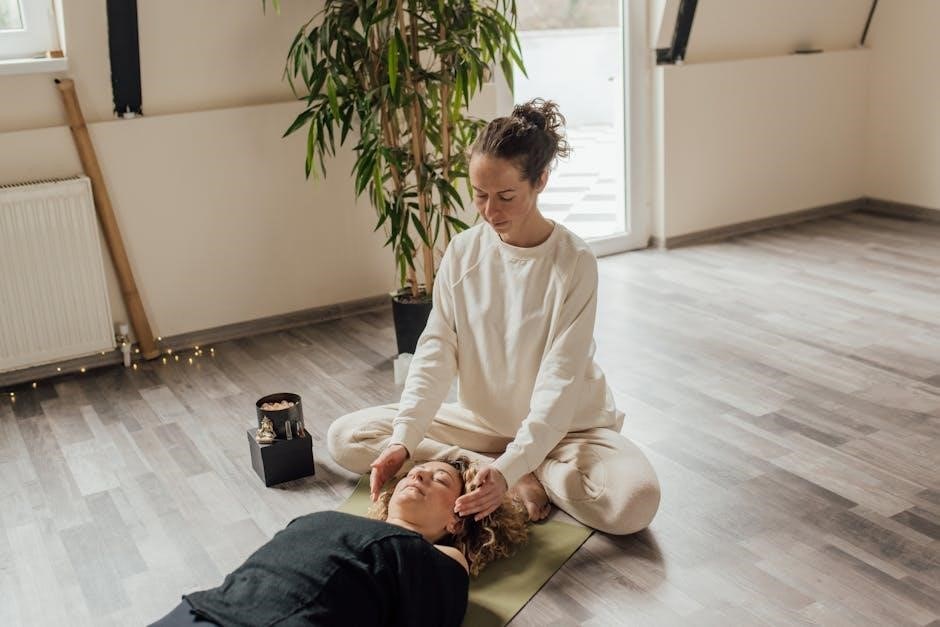
Understanding the Body’s Response to Trauma
Trauma profoundly impacts the body, often manifesting as physical sensations and nervous system dysregulation. Somatic exercises gently address these effects, fostering healing and restoring balance.
These practices acknowledge that trauma isn’t solely a psychological event, but a deeply embodied experience requiring a holistic approach to resolution.
The Role of the Nervous System
The nervous system is central to understanding how we experience and process trauma. It’s designed to detect threats and initiate a fight, flight, or freeze response, preparing us for survival. However, when faced with overwhelming events, this system can become dysregulated, leaving us stuck in states of hyperarousal or shutdown.
Somatic Experiencing recognizes that trauma isn’t simply a story the mind holds, but an imprint on the nervous system. Unresolved trauma can lead to chronic tension, anxiety, and difficulty regulating emotions. The exercises aim to gently release this trapped energy, allowing the nervous system to return to a state of balance and resilience.
By focusing on bodily sensations, these practices bypass the need to intellectually re-process the traumatic event. Instead, they work directly with the physiological responses, helping to complete the natural defensive responses that were interrupted during the original trauma. This allows for a gradual and safe release of stored tension, promoting a sense of calm and groundedness.
Ultimately, somatic exercises help to re-establish a healthy relationship between the mind, body, and nervous system, fostering a greater sense of safety and well-being.
Recognizing Physical Sensations of Stress and Trauma
Stress and trauma often manifest as physical sensations, providing crucial clues to what’s happening within the body. Learning to recognize these signals is a foundational step in somatic experiencing. Common sensations include tightness in the jaw or chest, shallow breathing, muscle tension (especially in the shoulders and neck), digestive issues, and a general feeling of being “on edge.”
These aren’t simply symptoms to be suppressed; they are the body’s way of communicating unresolved experiences. Somatic exercises encourage you to become a curious observer of these sensations, noticing their location, intensity, and quality – are they sharp, dull, hot, or cold?
Pay attention to subtle cues like changes in skin temperature, tingling sensations, or a sense of heaviness. Recognizing these physical manifestations allows you to approach them with compassion and understanding, rather than judgment or resistance.
This mindful awareness is key to unlocking the body’s innate capacity for healing, and it forms the basis for safely navigating the exercises and releasing stored tension.

Explore twelve powerful exercises designed to gently reconnect you with your body, release tension, and cultivate a sense of safety and groundedness through mindful movement.
These practices offer a pathway to healing, promoting emotional regulation and enhancing overall well-being by integrating body awareness with intentional movement.
Grounding Exercise: Feeling Your Feet
Begin by finding a comfortable stance, either seated or standing, allowing your body to settle into a position of ease. Gently close your eyes, if that feels safe, and shift your attention downwards, towards your feet.
Notice the sensations of your feet making contact with the ground. Feel the pressure, the texture, the temperature. Are they warm or cool? Are you aware of any tingling, pulsing, or subtle vibrations? Simply observe without judgment.
Allow your breath to deepen, and with each exhale, imagine sending a gentle wave of relaxation down your legs and into your feet. Visualize roots growing from the soles of your feet, anchoring you firmly to the earth.
If your mind wanders, gently redirect your focus back to the sensations in your feet. This exercise is about cultivating present moment awareness and establishing a sense of stability and groundedness within your body. Continue for several minutes, noticing any shifts in sensation.
This simple practice can be used anytime, anywhere, to help regulate your nervous system and bring you back into the present moment, especially during times of stress or overwhelm.
Body Scan for Tension
Lie down comfortably on your back, with your arms relaxed at your sides and your legs slightly apart. Close your eyes gently, and begin to bring your awareness to your breath. Notice the natural rhythm of your inhales and exhales, without trying to change it.
Start by focusing your attention on your toes. Notice any sensations present – warmth, coolness, tingling, or perhaps tension. Simply observe, without judgment. Slowly move your awareness up your feet, ankles, and calves, scanning for areas of tightness or discomfort.
Continue this process, systematically moving your attention through your entire body – your thighs, hips, abdomen, chest, back, shoulders, arms, hands, neck, and finally, your head. Notice any areas where you hold tension, and acknowledge those sensations.
As you identify tension, imagine breathing into those areas, softening and releasing any tightness with each exhale. You don’t need to force anything; simply allow the tension to dissolve naturally.
This practice cultivates body awareness and helps you identify where you store stress, promoting relaxation and a deeper connection to your physical self.
Pendulation Exercise: Noticing Flow
Pendulation mimics the natural rhythm of the nervous system, oscillating between states of activation and relaxation. Begin by bringing awareness to a neutral sensation in your body – perhaps the feeling of your feet on the floor or your hands resting in your lap.
Gently introduce a slightly more intense sensation, like recalling a pleasant memory or focusing on a warm spot in your body. Notice how this feels, without getting lost in the story. Then, allow your attention to return to the neutral sensation.
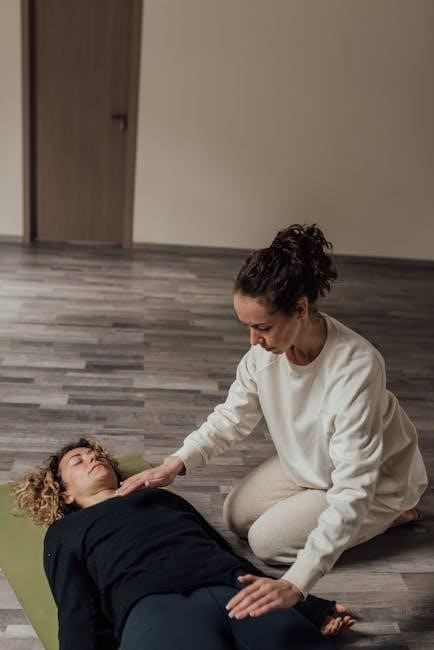
Continue this gentle “swinging” – moving between the mild activation and the neutral state. Observe the shifts in sensation, noticing how your body responds. The key is to keep the movements small and manageable, avoiding overwhelm.
This exercise helps regulate the nervous system by building tolerance to sensations. It allows you to experience a range of feelings without becoming flooded, fostering a sense of safety and control.
Pay attention to the flow between sensations, noticing the natural ebb and flow of energy within your body. This practice cultivates resilience and self-regulation.
Titration: Small Dose Exposure
Titration, in Somatic Experiencing, involves exposing yourself to small, manageable “doses” of a traumatic memory or sensation. This is a crucial technique for safely processing trauma without re-experiencing it fully. Begin by identifying a small aspect of the distressing event – a fleeting image, a specific sound, or a minor physical sensation.
Focus your attention on this small fragment, noticing what arises in your body. Observe any sensations, emotions, or thoughts without judgment. If the sensation becomes overwhelming, gently shift your focus to a neutral sensation, like your breath or the feeling of your feet on the ground.
Gradually, and only when you feel ready, return your attention to the initial fragment. Repeat this process, slowly increasing the “dose” of exposure as your nervous system becomes more regulated.
The goal isn’t to relive the trauma, but to allow your body to process it in small, digestible pieces. This builds resilience and helps to complete the natural defensive responses that were interrupted during the original event.
Remember to prioritize safety and self-compassion throughout this exercise.
Orienting Response: Engaging with Safety
The Orienting Response is a fundamental survival mechanism – our innate ability to scan our environment for safety. In Somatic Experiencing, we intentionally activate this response to help regulate the nervous system and move out of a state of hyperarousal or shutdown.
Begin by finding a comfortable and safe space. Slowly turn your head from side to side, noticing details in your surroundings – colors, shapes, textures, and sounds. Allow your gaze to linger on objects that feel calming or neutral.
Notice how your body responds as you scan. Do you feel a sense of curiosity or relaxation? If you experience discomfort, gently narrow your focus to something specifically safe and grounding.
This exercise helps to re-establish a connection to the present moment and signals to your nervous system that you are no longer in danger. It’s about actively seeking out resources in your environment and reinforcing a sense of safety.
Regular practice can strengthen your ability to regulate your emotions and respond to stress with greater ease and resilience.
Tracking Sensations: Following the Energy
Tracking Sensations is a core practice in Somatic Experiencing, inviting you to become a curious observer of the subtle energies within your body. It’s about noticing, without judgment, the physical sensations that arise in response to thoughts, memories, or emotions.
Begin by closing your eyes and bringing your attention to a recent experience that evokes a noticeable feeling. Notice where you feel this sensation in your body – is it warmth, tingling, tightness, or something else?
Gently follow the sensation as it shifts and changes. Don’t try to analyze or interpret it; simply observe its qualities – its location, intensity, shape, and texture.
Allow the sensation to unfold naturally, noticing if it spreads, constricts, or transforms. If it becomes overwhelming, gently shift your attention to a neutral sensation, like the feeling of your feet on the ground.
This exercise helps to release trapped energy and complete unfinished survival responses, promoting a sense of wholeness and integration.
Releasing Tension in the Jaw
The jaw often holds significant tension, a common physical manifestation of stress, anxiety, and suppressed emotions. Releasing this tension can have a surprisingly profound impact on overall relaxation and emotional well-being.
Begin by gently noticing your jaw. Is it clenched, tight, or relaxed? Without forcing anything, allow your lips to part slightly, and notice if that creates any change.
Slowly move your jaw in small, circular motions, clockwise and then counterclockwise. Pay attention to any sensations that arise – tightness, discomfort, or even a sense of release.
You can also gently massage the muscles around your jawline, using your fingertips to apply gentle pressure. Focus on the areas that feel particularly tense.
Imagine breathing into the tension in your jaw, and with each exhale, visualize it softening and releasing. This simple exercise can help to calm the nervous system and promote a sense of groundedness.
Shoulder Rolls for Emotional Release
Shoulders frequently bear the weight of emotional burdens, becoming tense and constricted when we experience stress or hold onto unresolved feelings. Shoulder rolls are a gentle yet powerful somatic exercise to facilitate emotional release.

Begin by standing or sitting comfortably, with your arms relaxed at your sides. Take a few deep breaths, noticing the natural movement of your shoulders with each inhale and exhale.
Slowly begin to roll your shoulders forward in circular motions, noticing any sensations that arise – tightness, warmth, or a sense of release. Continue for several repetitions.
Then, reverse the direction, rolling your shoulders backward in circular motions. Again, pay attention to the sensations in your body, allowing yourself to fully experience the movement.
As you roll, imagine that you are physically releasing any pent-up emotions or tension stored in your shoulders. This exercise can help to unlock emotional blockages and promote a sense of freedom.
Gentle Stretching with Awareness
Gentle stretching, performed with mindful awareness, is a cornerstone of somatic experiencing, fostering a deeper connection between mind and body. Unlike traditional stretching focused on achieving flexibility, this practice prioritizes sensation and internal experience.
Begin by finding a comfortable position, either seated or lying down. Initiate a very gentle stretch, perhaps extending one arm overhead or gently twisting your torso. The key is to move slowly and deliberately.
As you stretch, bring your full attention to the sensations in your body. Notice where you feel the stretch, and observe any accompanying emotions or thoughts. Avoid pushing yourself beyond your comfort zone.
Instead, focus on exploring the edges of your range of motion, allowing your breath to guide the movement. If you encounter resistance, simply pause and breathe into the sensation.
This practice isn’t about how far you can stretch, but about cultivating a heightened awareness of your body’s signals and honoring its limitations, promoting release and restoration.
Breath Awareness and Regulation
Breath awareness is fundamental to somatic experiencing, serving as an anchor to the present moment and a powerful tool for nervous system regulation. Often, trauma disrupts natural breathing patterns, leading to shallow or restricted breaths.
Begin by simply noticing your breath without attempting to change it. Observe the rise and fall of your abdomen or chest, the sensation of air entering and leaving your nostrils. Become a neutral observer of your breath’s natural rhythm.
Once aware, you can gently begin to regulate your breath. Try lengthening your exhales, which activates the parasympathetic nervous system, promoting relaxation. A simple technique is the 4-7-8 breath: inhale for four, hold for seven, exhale for eight.
Pay attention to how different breathing patterns affect your body and emotions. Notice any shifts in tension, energy levels, or emotional state. Use breath as a resource to soothe and ground yourself.
Consistent breathwork can help restore a sense of safety and calm, allowing you to navigate challenging sensations and emotions with greater ease and resilience.
Movement Improvisation: Expressing Through the Body
Movement improvisation invites you to explore spontaneous, non-goal-oriented movement as a form of self-expression and emotional release. This isn’t about creating a beautiful dance; it’s about allowing your body to move in response to internal sensations and impulses.
Start by finding a comfortable space and gently shaking or swaying your body to loosen up. Then, close your eyes and simply listen to your inner experience. What sensations, emotions, or images arise?
Allow your body to move in whatever way feels natural, without judgment or self-criticism. Follow the impulses that emerge, whether it’s a gentle stretch, a fluid wave, or a more energetic expression.
Notice how the movement changes as your internal state shifts. There’s no right or wrong way to move; the goal is to create a dialogue between your body and your inner world.
This practice can help unlock stored emotions and tension, fostering a sense of liberation and embodied awareness. It’s a powerful way to reconnect with your body’s innate wisdom.
Self-Touch for Comfort and Reassurance

Self-touch is a gentle yet profound practice within Somatic Experiencing, offering a direct pathway to self-soothing and nervous system regulation. It’s about providing your body with the nurturing touch it may have lacked, especially during times of stress or trauma.
Begin by bringing your attention to areas of tension or discomfort. Gently place your hands on those areas – your chest, abdomen, arms, or legs – and simply rest them there.
Notice the sensations that arise. Is there warmth, coolness, tingling, or pressure? Avoid trying to change anything; simply observe with curiosity and acceptance.
You can experiment with different types of touch – gentle stroking, firm pressure, or simply holding the area with compassion. Let your intuition guide you to what feels most comforting.
This practice can help activate the parasympathetic nervous system, promoting relaxation and a sense of safety. It’s a powerful reminder that you can be a source of comfort and reassurance for yourself.

Safety Considerations and Precautions
Prioritize gentle exploration and listen to your body’s signals; stop if discomfort arises. Working with a qualified practitioner is recommended, especially with trauma.
Modify exercises to suit individual needs, respecting personal boundaries and limitations for a safe, supportive experience.
Working with a Qualified Practitioner
Embarking on somatic experiencing exercises can be profoundly beneficial, yet navigating potentially sensitive material often necessitates the guidance of a trained professional. A qualified practitioner provides a safe and supportive container for your process, ensuring you’re not re-traumatized or overwhelmed.
They possess the expertise to assess your individual needs, tailoring exercises to your specific history and current state. This personalized approach is crucial, as trauma manifests uniquely in each person. A skilled practitioner can help you titrate experiences – breaking them down into manageable doses – preventing overwhelm and fostering a sense of control.
Furthermore, they can skillfully track your physiological responses, recognizing subtle shifts in your nervous system and offering appropriate support. They’re equipped to address potential challenges that may arise, such as dissociation or emotional flooding, guiding you back to a grounded state. Choosing a practitioner with extensive training in Somatic Experiencing, and ideally, experience working with trauma, is paramount for a safe and effective journey.

Ultimately, a practitioner isn’t simply leading exercises; they’re facilitating a deeply personal process of healing and self-discovery.
Modifying Exercises for Individual Needs
Somatic experiencing isn’t a one-size-fits-all approach; adapting exercises to your unique needs and sensitivities is crucial for a safe and effective practice. Recognizing your body’s limitations and respecting its boundaries is paramount. If an exercise evokes discomfort or overwhelm, immediately modify or discontinue it.
For individuals with chronic pain, gentle variations are essential. Reduce the range of motion, slow down the pace, or focus solely on breath awareness. Those with a history of dissociation may benefit from grounding exercises before attempting more exploratory practices. Similarly, individuals with anxiety might find shorter durations and a focus on safety cues more manageable.

Consider your emotional state. If you’re feeling particularly vulnerable, opt for simpler exercises like gentle stretching or self-touch. Always prioritize self-compassion and avoid pushing yourself beyond your comfort zone. Listening to your internal cues – sensations, emotions, and thoughts – is key to tailoring the practice to your specific needs. Remember, the goal isn’t to achieve a perfect form, but to cultivate a deeper connection with your body and promote healing at your own pace.



Be the first to reply